
Trends are easy to follow and hard to live with. The ones worth paying attention to are the shifts that make homes feel better, not just newer. Here are five directions we are seeing across our clients’ briefs in 2026, and how we are using them in real Sydney homes rather than chasing them for their own sake.
1. Warm, earthy palettes replacing cool grey
The cool greys and stark whites that defined the last decade are giving way to warmer, grounded tones: clay, terracotta, ochre, caramel and soft, sage-leaning greens. Pantone’s 2026 Colour of the Year, Cloud Dancer, points the same way, a soft, warm white rather than a clinical one. These tones make a home feel calmer and more welcoming, and they sit beautifully against natural timber and stone.
What we are seeing: We’re seeing this shift play out directly in client briefs — the word ‘grey’ has almost disappeared, replaced by requests for something ‘warmer’ or ‘softer’ without always landing on a specific name. When clients do name tones, it’s clay, oat, caramel and the occasional muted sage rather than the cooler neutrals that dominated a few years ago. It’s showing up most in paint and plaster finishes, where a warm white is doing the work a stark white used to.
2. Statement stone beyond the benchtop
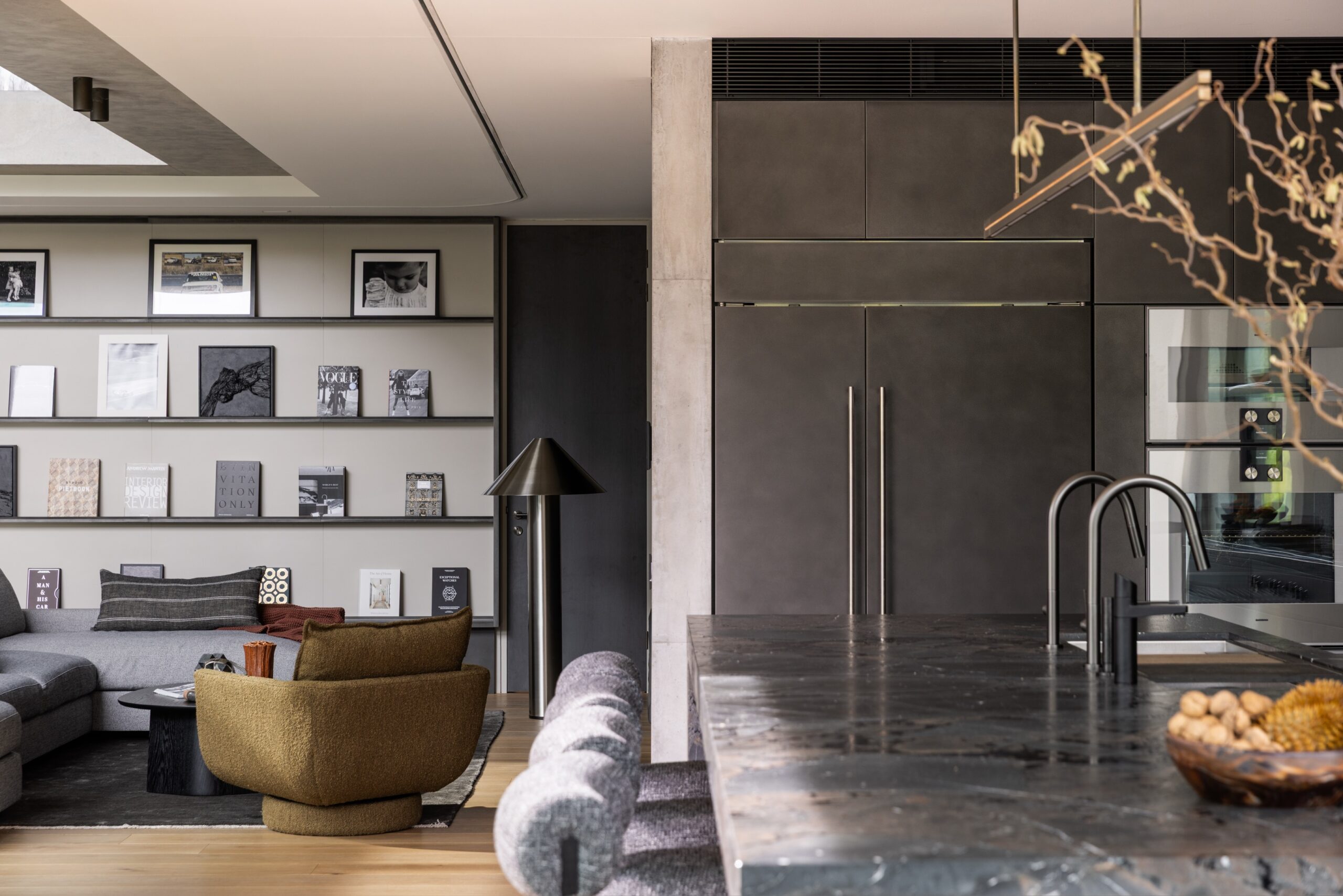
Heavily veined marble and dramatic natural stone are moving out of the kitchen and into the whole home: fireplace surrounds, vanities, furniture, splashbacks that run floor to ceiling. Used well, a single piece of expressive stone can anchor a room without anything else having to shout.
What we are seeing: Where stone used to be chosen to match a scheme, in 2026 it’s increasingly chosen to anchor one — a single strong slab doing the work that three or four finishes used to share. We’re seeing a shift toward stones with real character — heavy veining, fossilised detail, warm undertones — rather than the quiet, uniform surfaces that were popular a few years back. Applications are getting bolder too: full-height splashbacks, bullnose details, and stone carried from benchtop to wall in a single continuous gesture. The brief is less ‘practical surface’ and more ‘the thing you notice when you walk in’ — which changes how we specify it, and how much we’re willing to spend on the slab itself.
3. Curved and organic forms
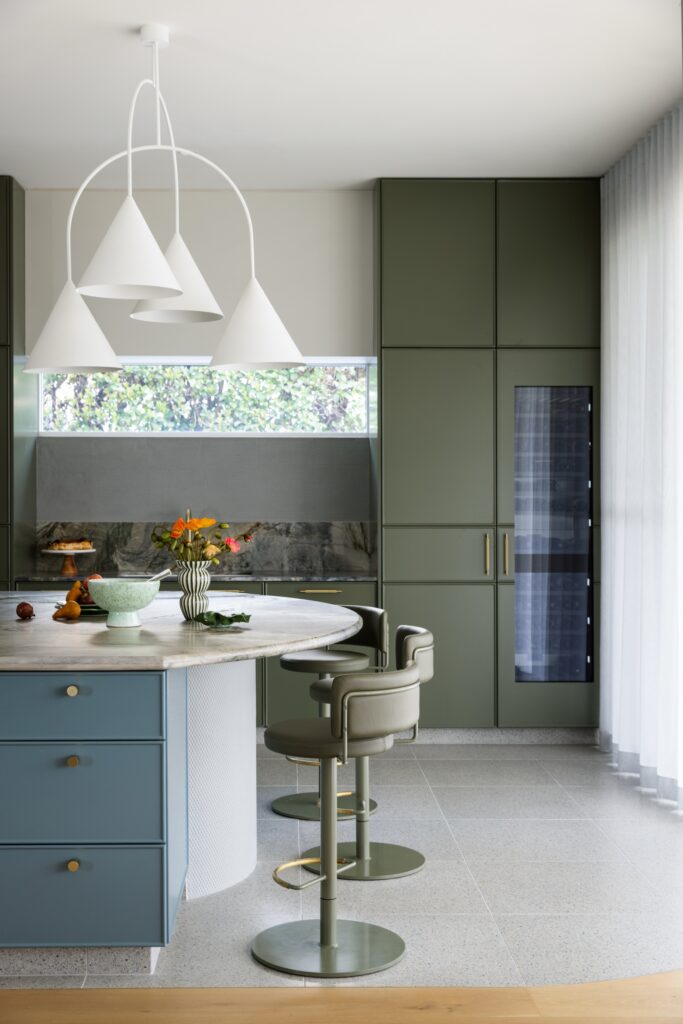
Hard edges are softening. Curved kitchen islands, arched openings, rounded joinery and sculptural furniture are bringing a more relaxed, human feel to interiors. The appeal is partly about mood, a curved room simply feels calmer, and partly about contrast against the strong rectilinear lines of most homes.
What we are seeing: Curves are showing up in a few deliberate spots rather than as a whole-home language — a rounded return on a dining banquette or island bench, an arched doorway, a sculptural pendant or console — and clients respond to them immediately in presentations. It’s rarely a request clients articulate upfront; more often it’s a reaction to a floor plan that feels too boxy or rigid once they see it laid out.
4. Biophilic design and a true indoor-outdoor connection
Bringing the outside in is no longer a single gesture, it is a whole approach: maximising natural light, layering in greenery, and using natural materials like timber, stone, rattan and linen so a home feels alive and restorative. In Sydney, where the climate and the outlook reward it, this is less a trend than a baseline expectation.
5. Collected, layered interiors over the showroom look
The pristine, matched-set interior is on the way out, replaced by homes that feel collected over time: vintage and antique pieces mixed with new, layered textures, and decor that tells the owner’s story. It reads as warmth and personality, and it has the side benefit of being more sustainable than buying everything new at once.
What we are seeing: Clients are increasingly bringing pieces to the table rather than expecting a fully sourced, matched scheme — a family heirloom, a vintage rug, something picked up travelling — and asking us to design around it rather than replace it. The brief has shifted from ‘source everything new’ to ‘help this feel like it belongs together’, which changes how we approach FF&E; we’re mixing in more antique and vintage sourcing alongside new pieces rather than defaulting to a single supplier look.
Warmth over perfection
The common thread across all five is warmth and intention. Homes in 2026 are being designed to feel personal and lived-in rather than perfect, and that is a shift we welcome, because it is exactly the kind of home that lasts. If any of these directions speak to a project you are planning, we would love to talk it through.